Most owners, architects, and project stakeholders want the same thing from a commercial construction partner: a smoother project.
But “smooth” does not happen because a contractor says the right things during the proposal process. It happens when the project team has a real operating model for planning, communication, accountability, procurement, field coordination, and decision-making before friction reaches the jobsite.
That is where better preconstruction and project coordination matter.
For Talisen, the Construction Concierge approach is the branded answer to a practical delivery problem: commercial projects need a contractor that can reduce confusion across planning, estimating, procurement, field operations, stakeholders, and closeout.
What owners and architects usually mean by a smoother project
Construction Concierge Coordination
A clearer operating model from preconstruction through closeout
The Construction Concierge approach gives owners and project teams a more organized way to manage decisions, procurement, communication, and accountability.
Single point of contactReduce confusion by keeping responsibility and communication paths clear.
Preconstruction alignmentConnect scope, cost, schedule, constructability, and procurement before field pressure builds.
Connected informationUse project systems and coordination habits to keep decisions visible.
Closeout disciplineCarry the same accountability through final documentation and turnover.
When owners or architects say they want a smoother construction process, they usually mean they want fewer avoidable surprises.
They want:
- clearer communication
- faster issue visibility
- stronger accountability
- more predictable coordination
- fewer late-stage scope surprises
- better alignment between design intent and field execution
- a contractor who can manage details without losing sight of the larger project path
Those expectations are reasonable, but they require structure.
Without a strong process, information can sit in separate lanes. Estimating may not fully connect to procurement. Procurement may not fully connect to field realities. Field conditions may not be communicated quickly enough to the owner or design team. Small issues can turn into larger project friction simply because responsibility and information flow were not clear.

What a Construction Concierge approach actually changes
The value of a Construction Concierge model is that it gives the client a clearer operating structure.
In practical terms, that means:
- one dedicated project manager / field superintendent structure
- a single point of contact for the client through the project manager
- information flowing across estimating, procurement, and field operations
- coordination supported by Procore and Talisen’s self-developed applications tied into its database and ERP systems
- clear decisions and accountability from concept through closeout
That structure matters because commercial construction is not only about completing tasks. It is about keeping multiple people, scopes, vendors, constraints, and decisions moving in the same direction.
The Construction Concierge approach gives owners and project teams a more organized way to move from early planning into active work without losing continuity.
Why preconstruction is where friction often gets reduced
Many construction problems feel like field problems when they appear, but they often begin earlier.
A scope item was not clarified. A procurement assumption was not tested. A decision-maker was not identified. A vendor handoff was not fully coordinated. A building condition was not surfaced soon enough. A design detail needed more constructability review before work began.
Better preconstruction helps reduce those problems by forcing the right conversations earlier.
That can include:
- reviewing constructability before field conflicts appear
- identifying long-lead or specialty procurement needs
- aligning owner decisions with schedule realities
- coordinating vendor responsibilities
- clarifying communication paths and approval authority
- translating design intent into buildable execution planning
This does not mean every issue disappears. It means the team has a better chance of identifying risk before it becomes disruption.
What this looks like in practice
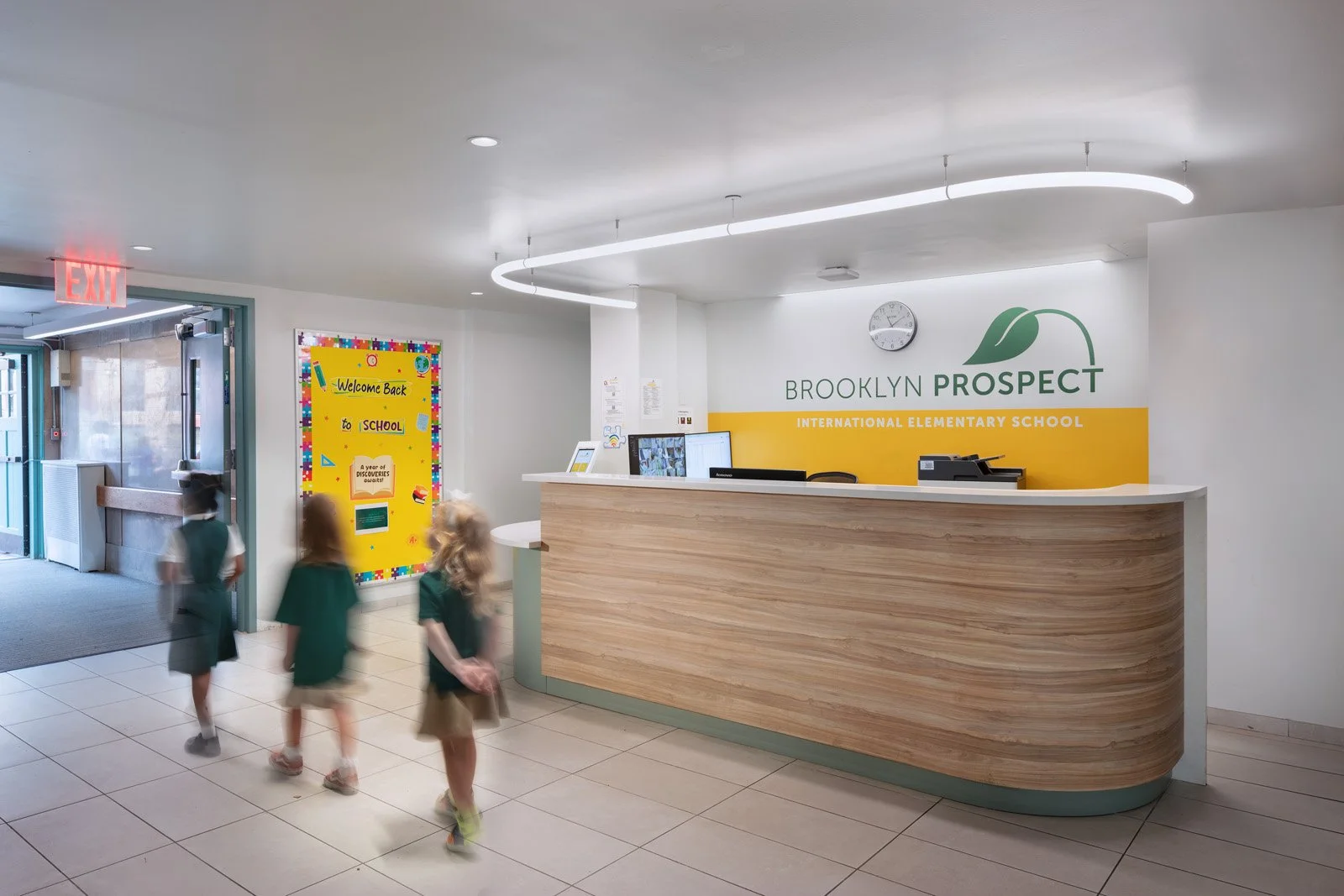
Brooklyn Prospect Charter School at 272 Macon Street is a strong example of why coordination quality matters.
The project involved a repeat client, DBI Projects as the owner’s representative, Loci Architecture as the architectural team, a historically significant building, and an $8.5 million, 50,000-plus-square-foot renovation.
That is the kind of setting where responsibility and information have to move clearly across multiple parties. The owner’s representative, architect, contractor, vendors, field teams, and client stakeholders all need visibility into what is happening, what decisions are required, and how the work is progressing.
In a project like that, the contractor’s role is not limited to execution. The contractor has to help keep the process organized so planning, procurement, communication, and field operations support each other instead of competing for attention.
That is the kind of environment where a Construction Concierge model becomes concrete: one accountable project path, clear communication, and coordinated movement from concept through closeout.
A smoother project comes from repeatable coordination
Where better coordination protects schedule and project flow
Project friction usually shows up when the construction team is forced to react to things that could have been clarified earlier.
Better coordination helps protect project flow by improving:
Decision visibility
Owners and project teams need to know which decisions are required, who owns them, and when they affect the schedule.
Procurement coordination
Materials, equipment, vendors, and specialty scopes need to be connected to the project schedule early enough to avoid preventable delays.
Field communication
When field conditions change, stakeholders need clear updates and a practical decision path. Otherwise, small issues can stall progress.
Design and construction alignment
Architectural intent and field execution need to stay connected. Preconstruction and constructability review help reduce the gap between what is planned and what can be built cleanly.
Accountability
A single point of contact gives the client a clearer path through the project. It reduces uncertainty about who is tracking issues, coordinating next steps, and keeping the work moving.
What to ask a contractor before awarding the work
Owners, architects, and project stakeholders can learn a lot by asking how a contractor actually manages coordination.
Useful questions include:
- Who will be the single point of contact for the client?
- How will estimating, procurement, and field operations stay connected?
- What tools will be used to track project information and decisions?
- How are owner decisions documented and escalated?
- How does the team identify constructability issues before they become field problems?
- How are vendors and specialty scopes coordinated?
- How will schedule risks be communicated?
- What is the closeout accountability path?
- Which past projects show the team can coordinate across multiple stakeholders?
These questions get closer to the actual delivery model than broad claims about experience alone.
Why this direction fits Talisen
Talisen’s Construction Concierge framing is strongest when it is tied to real operating structure.
The value is not simply that Talisen is responsive or service-oriented. The value is that the firm can give owners, architects, and project teams a clearer system for moving through planning, coordination, construction, and closeout.
That system includes project leadership, field visibility, technology-supported information flow, procurement coordination, and accountability from early planning through completion.
For commercial construction buyers, that matters because process quality affects project experience. A better operating model can reduce confusion, improve communication, and help the team move through complexity with more control.

Project Proof
Brooklyn Prospect Charter School shows coordination across stakeholders
School and institutional work benefits when design intent, owner priorities, procurement, field coordination, and closeout expectations are connected early.
Commercial construction friction is rarely caused by one issue alone. It usually builds when information, decisions, responsibilities, and field realities are not coordinated early enough.
Better preconstruction and project coordination help reduce that friction.
Talisen’s Construction Concierge approach gives that coordination a practical structure: a clear point of contact, connected project information, accountable leadership, and a more organized path from concept through closeout.
For owners, architects, and project teams comparing contractor fit, that process discipline is not a small detail. It is one of the clearest indicators of how the project will actually feel once the work begins.
Planning a project where coordination matters?
Talisen’s Construction Concierge approach is built for owners, architects, and project teams that want a clearer path through preconstruction, procurement, field execution, and closeout.